Tuesday, May 5, 2020

A Life's Mission

Sister Columba (Belinda Cooke) probably on an celebration of her vows
Meet Belinda Cooke. Belinda would be my first cousin, twice removed. She was my great-grandfather Michael's  niece. Here's a small tree to help keep it straight.
Add caption
Belinda had five brothers and lived on the family farm in Clooningan. She was born in 1898, so this would have been long before much knowledge of modern illnesses, much less treatment. At some point in her childhood, she got polio. The family story is that she prayed that if she were cured, she would devote her life to missions.

In the early twenties she made good on this promise and went to the Convent of the Good Shepherd in Limerick. From there she went on to France, probably the mother house in Angers for her training as a teacher. At some point she took her vows and became Sister Columba. She took a trip home before going on her assignment and announced to the family she would not be back. Her assignment took her to a convent and school in Mysore, India. 
Sister Columba on the right with Anne Leonard
You can get some idea by checking out the background in the picture. You can see the students and a bit of the school and convent. My cousin, Anne Leonard, worked for an airline and was able to visit her.

And this also gives you some of the "flavor" of her world.


She also kept up a lively correspondence with her nieces and nephews in Ireland, Canada, and the United States. The letter I'm quoting from is from her to her grand-nephew Jimmy. My cousin Denise kindly shared.

"You asked what subjects I teach. Well, dear I teach every subject except 2nd language and that is always the language of the country so I cannot teach it. Our classes here are very big I have over fifty. They are mostly all bright intelligent children. Last year I taught the boys, this year I have girls. Of course they are mostly all pagans; that is the sad part of it."
I suppose this attitude, though a little uncomfortable for us, is not unexpected for a nun at the time. And she devoted her life to teaching them, so I can't fault her for that. I used to think classes of thirty were too big, I can't imagine fifty! She wrote another letter to Denise herself, but it is mostly personal and about family.

I usually do a lot more research on the people I blog about, but with a nun that's rather hard. Plus her order has fallen under a bit of a cloud, so information is hard to come by.  This isn't the only person in the family to take vow, but she is in more recent memory so there are picture and relics to tell the story. And she kept her promise in a way I find admirable.

Sunday, April 5, 2020

Plague

Katherine Rhodes-Fields from The Plague Doctor series. All rights reserved.
What could be more appropriate today than a plague doctor in his mask? It is certainly nothing new in the history of mankind. You might remember my post about how one small town where my Rogers ancestors lived dealt with an outbreak of smallpox. And how some surrounding towns took a more bloodless approach. Check that out here.

The plague of the 19th Century was tuberculosis. Before it was understood that a particular bacteria caused the disease, crowding, poor sanitation and poor hygiene killed large numbers of people in this country who contracted TB. No surprise, when people were removed to cleaner sanitariums they often recovered. I was startled to discover how many of my relatives died of tuberculosis as I worked on my tree. Finding them all to list them would have taken the better part of my month at home. So I chose the most striking examples. I would find some really well-kept registers that listed "consumption" or "phthisis pulmonalis" as the cause of death. That's TB. There were probably many others, but before good records were standardized, an early female death would easily have been either childbirth or TB.
Jennie R Smith- Nov 1880
This is one of the saddest records I found. Jennie was my great-great-grandfather's youngest sister. She died at just nineteen. The worst part was that out of twelve children in this family, only 3 lived to adulthood. Jennie almost made it. On the same page recording her death in Waltham I found many other TB deaths.

Another story was that of the family of Moses Rogers of Holden. He was my third great grandfather's brother. In his family he lost 4 children to tuberculosis, one to typhoid, one to typhus and one to cancer. Seven out of his eight children. Some in adulthood, to be sure, but still... 

I think  about the things that killed people in the 19th century: disease and childbirth. Old age was a luxury. People were accustomed to death in a way we just aren't. And accustomed to outbreaks of diseases we have long left behind. On the register page with Jennie's death I found tubercular meningitis, tuberculosis and six cases of diphtheria.  The outbreak at one point was so severe that people blamed vampires and began doing strange rituals to stop it. You can read about that here. Bleach and toilet paper hoarding may be more logical, but no less hysterical.
Josephine Payne Fitzgerald 1910
This last record is the death of my great-uncle Robert Fitzgerald's wife Josie in 1910. Even then, tuberculosis was taking lives. Her infant son died the same month of  "lumbar pneumonia", but who knows whether she passed it along to him?  Robert was left to raise my cousin Katherine until 1917 when a freak accident killed him and she went to live with my grandparents.


I found stories like this all through the family tree as I have worked along. Now to be sure, tuberculosis was a slow death. People knew the outcome and had some time to accustom themselves to the eventuality; the average TB patient lived three to five years. There were no airplanes. People traveled less. The spread would have been slower. And living in an age where we are inoculated against the biggest killers of previous ages, we have no reference for what we are seeing today.

Here's a thought. Picture your family tree as a very large inverted triangle with you, the "distillation" at the very bottom. That image reminds me again of something that struck me early on in genealogy: I am the result of survival of every possible type of calamity. My ancestors survived pandemics, deaths in accidents, death in childbirth, war, famine  just to name a few. My very existence is a kind of miracle. Until I did genealogy, I never really grasped or appreciated that. 
Today, I do even more.


Thursday, March 26, 2020

Throwback Thursday

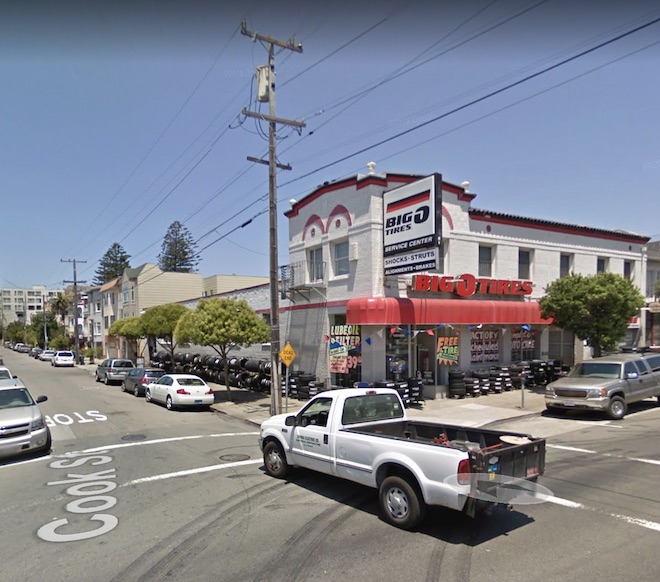
This is Ann Cooke, the widow of Michael Stinson Cooke in front of her home at the corner of Geary and Cooke St.. (San Francisco) I don't know the year, but Michael died in 1897 and she died in 1905 so my guess is somewhere in that time period.
This is that same corner today. Based on a previous much older photo, the house actually faced what is now Geary and sat where the tire store is located at about the spot you see the small tree.

Saturday, February 1, 2020

A Sticky Disaster in the North End

Clarke at Hanover St. in Boston's North End about 1893-courtesy of the photo archives Boston Public Library
This is Boston's famous North End neighborhood, just before the turn of the century. My Cooke relatives weren't living here at this time; they were living in Dorchester near Michael's workplace in the stoneyard. It gives you some idea, however, of what the neighborhood looked like. There were the famous buildings, the home of Paul Revere and the Old North Church, and then there were squalid tenements. The neighborhood was teeming with Irish immigrants. Indeed, the Cookes moved to 164 Endicott Street and were shown there on the 1900 census.

They didn't live there long. Michael moved the family across the Charles River to Charlestown and died in 1913. By the time our story takes place in 1919 the neighborhood was largely Italian immigrants. Michael's widow was in Everett with her daughter and my grandmother, grandfather and their family were living in Charlestown. But I tell this story as an illustration of what happened in immigrant neighborhoods in many cities at this time where there were industries side-by-side with poor housing and little regulation to protect the residents.

The story actually began before the first World War when the U.S. Industrial Alcohol Company began work on a very large tank on the waterfront on Commercial Street in the North End. The company planned to house large amounts of imported molasses awaiting shipment to its distillery to be turned into explosives. Right from the beginning, the enormous tank was cursed. It was put up quickly, with substandard sheet metal, it was never properly tested and when problems became evident, the company covered them up. Molasses ran down the sides of the tank inviting the poor neighborhood children to collect it in buckets. The company painted the tank rust brown to disguise the leaks. Workers heard shrieks and moans coming from inside the tank. People standing near the tank reported feeling the sides of the tank pulsing with the fermentation and gases inside. It was a disaster waiting to happen. 

On January 15, 1919, disaster happened. The tank failed in a spectacular way and all at once. Rivets shot like artillery fire, metal panels buckled and an explosion of 2.3 million gallons of molasses created a 15 foot tidal wave on Commercial Street. It slammed into buildings, cellars, people and animals burying everything in its path. A section of the sheet metal sliced through the supports of the elevated train track, collapsing it. Only quick thinking saved two operating trains from coming down with it.
The arrows point to the tank and the former Cooke home. the dots outline the extent of the molasses flood
Buildings were inundated or destroyed completely. Horses could not escape the sticky mess and had to be shot. Twenty-one people died either immediately or within the week. Many more were injured. A firehouse immediately next to the tank was lifted from its foundation and moved trapping several firefighters inside. Some people were swept into the frigid Charles River and not found for weeks. One child, who had been collecting firewood from the train track, was crushed by a train car and drowned in molasses.
These pictures are from the archives of the Boston Public Library. They tell the story best.
An overview of the area immediately after the disaster


Fireman attempting to rescue people- the Cloughty house, in the background was directly across the street from the tank. Maria Cloughty was crushed instantly
the collapsed train track with a combination of molasses and sea water underneath
My father would have been a baby at the time, but his twelve-year-old cousin Catherine, who was living with them on Mount Vernon Street would certainly have been aware.  I can't even imagine what that would have been like.

It took weeks of cleanup with salt water and fire hoses. That part of the North End was never the same. Today, the land is a park and ball field.  They say that even today, on a warm summer day, you can smell molasses on Commercial Street. A lawsuit ensued, of course, and the company tried to pin the incident on dynamite planted by anarchists. They were not successful and damages were awarded. Cold comfort to those who lost their means of support or lived in pain the rest of their lives.

The Great Molasses Flood has become a piece of Boston history, albeit a rather bizarre one. It was well documented in Dark Tide by Stephen Puleo. Laws were eventually strengthened to protect the public, but it was the court case that had the most lasting effect as Puleo points out in this video.

What brought this topic to mind was an explosion at an industrial plant in the middle of a residential neighborhood- right here in Houston. Some things just don't change.

Eugene Gets a Little Cleaning and Recognition

  The mural in Highland Baptist Church When  I last visited New England In 2013, I was determined to talk to as many elders in the Tapply fa...